If the first draft is the wall
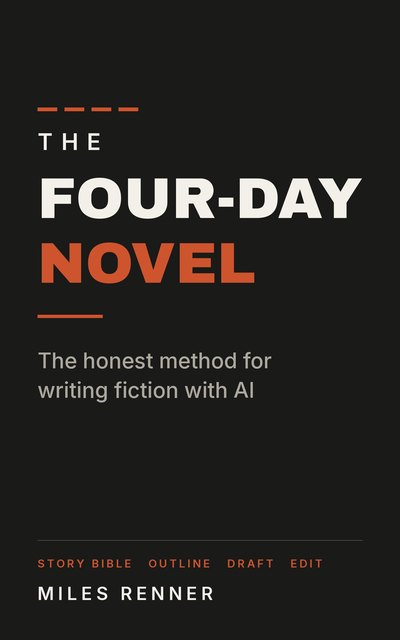
The Four-Day Novel
The Honest Method for Writing Fiction with AI
You tried it. You read the chapter back. It was smooth, competent and dead — and you concluded the tool was the problem.
Kindle · Paperback · included in Kindle Unlimited
It wasn't the tool. You asked a language model to be the author, and it did exactly what it is built to do: hand back the median of everything ever written on the subject.
Nobody gets a book that way. What they get is Chapter 2 of this one — a museum of the people that failed for, and what it cost them in months, money and reputation.
The argument
Authorship was never located in the typing. It sits in four things: vision, architecture, voice and judgment.
James Patterson has worked openly with co-writers for forty years. Alexandre Dumas ran what amounted to a fiction workshop with Auguste Maquet inside it. Carolyn Keene never existed at all. In none of those cases did anyone seriously argue that the named author hadn't authored the book — because the part that makes a book yours was never the keystrokes.
Keep those four things and the work is yours. Give any one of them away and it isn't — and it makes no difference whether you handed it to a language model or to a person. That is the whole test, and it is the reason this method looks nothing like the ones being sold to you elsewhere.
The method, in five moves
- Build a style sheet out of your own writing. This is the step nearly everyone skips, and it is the one doing most of the work — it is the difference between prose that sounds like you and prose that sounds like a machine impersonating a writer.
- Build a story bible. So your co-author remembers your book between sessions: who these people are, what already happened, what the rules of the world are.
- Outline properly, then argue with it. Most of what the machine offers is the average of everything ever written. Your job is to notice that and overrule it.
- Draft one chapter at a time, in context. Never in bulk. Bulk is where slop comes from.
- Edit every line of what comes back until it is yours. Chapter 9 is the longest in the book, because this is where the book is actually written.
And the parts nobody else will tell you
A full chapter on disclosure — what Amazon's KDP asks you to declare, what readers reasonably expect, what the detectors can and cannot actually see, and where the genuinely hard cases sit. A chapter on the tool landscape written in terms of what each kind of tool is for, so the book does not rot the next time the models change. And an annotated prompt library at the back that you can lift and adapt.
What it will not do
- It will not get you forty books a month. It will slow you down on purpose.
- It will not sound like you if you skip the style sheet. Nothing will.
- It will not survive skipping the outline. The draft goes shapeless by chapter four, every time.
“Authorship was never located in the typing.”
Contents
- •Introduction
PART I — Foundations
- 1The Co-Author in the Machine
- 2Anatomy of AI Slop
- 3The Mindset Shift
PART II — The Method
- 4Your Voice Is the Asset
- 5The Story Bible
- 6Genre Templates and Structure
- 7Brainstorming to Outline
- 8Drafting, One Chapter at a Time
- 9Editing AI Prose
PART III — Into the World
- 10The Tool Landscape
- 11The Nonfiction Adaptation
- 12Publishing Realities
- •Bonus — The Annotated Prompt Library
Who it's for
- You have stories you want to tell, and the eighty-thousand-word typing bill is the thing that keeps stopping you.
- You have tried AI drafting, hated what came back, and assumed the tool was at fault.
- You want a process you can defend — to readers, to a platform, and to yourself.
Who it isn't for
- You want a content farm. This book is an obstacle to that.
- You believe any use of AI in fiction is illegitimate. Chapter 1 makes the opposing case, but it isn't trying to convert you.
Questions
Can you publish a novel written with AI on Amazon?
Yes. Amazon does not prohibit AI-assisted or AI-generated books on KDP; what it requires is that you tell them about it when you publish, and it caps how many new titles you can upload per day. What gets accounts closed is not the use of AI, it is volume abuse, copyright problems and content that breaks the guidelines. Chapter 12 goes through this properly — and since platform terms change, check KDP's current content guidelines before you upload.
Do you have to disclose AI use to Amazon KDP?
KDP asks you at publication time to declare AI-generated content, and it draws a line between content that was generated and content that was AI-assisted — work you created, where AI helped you edit, refine or brainstorm. That declaration goes to Amazon, not onto your product page. Chapter 12 covers where the line actually falls for a book built with this method, and what you owe readers on top of what the platform requires.
Will AI detectors flag my book?
AI detectors are unreliable in both directions — they clear machine text and they flag human text, especially clean, plain prose. The book covers what they measure and why. The more useful point is that a manuscript built this way has been through a full line edit in your own voice, which is a different artefact from raw model output, and reads like one.
Which AI is best for writing fiction?
The book deliberately does not crown one, because that answer expires. Chapter 10 covers the tool landscape by what each kind of tool is good at — long-context drafting, brainstorming, line-level rewriting — so the method survives the models changing. The prompt library at the back is written to be portable.
Isn't AI-written fiction just slop?
Most of it is, and Chapter 2 is an anatomy of exactly why: bulk generation, no style sheet, no structural authority, no line editing. Slop is what you get when the machine is asked to be the author. The method here keeps vision, architecture, voice and judgment with you and uses the model only for the part that was never where authorship lived.
Will I really write a novel in four days?
Four days is the drafting window the method is built around once the preparation is done — and the preparation is most of the work. The style sheet, the story bible and the outline take considerably longer than the draft. The title describes the shape of the process, not a promise about your calendar.
Does any of this work for nonfiction?
Yes. Chapter 11 is the nonfiction adaptation: the story bible becomes a source-and-argument file, and everything else transfers with small changes.
The Four-Day Novel
You tried writing with AI and the chapter came back dead. The problem was not the model — it was asking it to be the author.
Kindle · Paperback · included in Kindle Unlimited
Also by Miles Renner
 You Are Not LazyThe Real Reasons You Stopped Writing, and How to Start Again
 Thirty Days of WritingA Day-by-Day Companion for the Novel-in-a-Month Challenge
 Page OneHow to Open a Novel: The Four Questions Every Opening Has to Answer
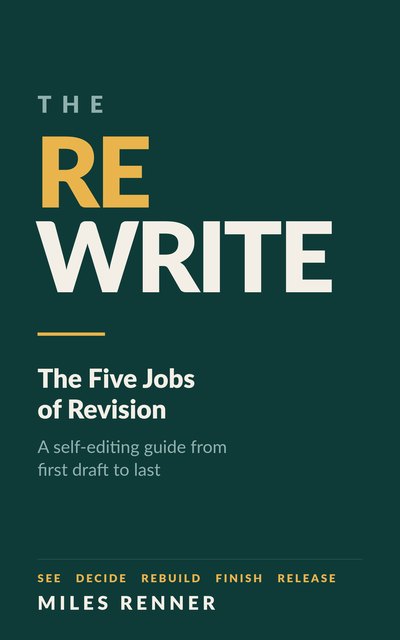 The RewriteThe Five Jobs of Revision: A Self-Editing Guide from First Draft to Last