If nobody gets past page one
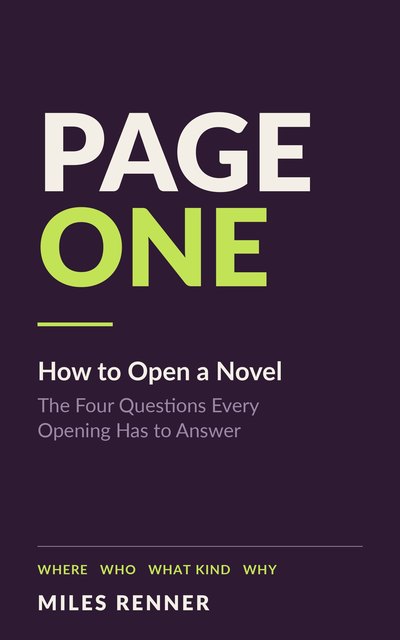
Page One
How to Open a Novel: The Four Questions Every Opening Has to Answer
Nobody gets past your first page, and nobody can tell you why.
Kindle · Paperback · included in Kindle Unlimited
Not because anyone was being kind. A reader who stops does not know why she stopped. Press her and she will invent a reason — it didn't grab me — which describes the outcome and diagnoses nothing.
So you were given the only advice available. Sharpen the hook. Start later, start louder, start with the body already on the floor.
The hook was almost never the broken part.
Sit in a room where openings are actually judged — a slush pile, an agent's screen, a panel that stops the moment three hands go up — and the pages that fail are frequently not dull. Several of them are thrilling. They get stopped anyway, and the reasons cluster: I didn't know where I was. I couldn't tell who I was following. I had to go back to the top.
Not bored. Lost. And being lost inside a book does not feel like boredom. It feels like being somewhere nobody has shown you around — and a reader who feels that puts the book down and blames her own tiredness.
The four questions a reader is asking before she will turn the page
- Where am I? — grounding, which is not description, and costs about a clause.
- Who am I with? — not a face in a mirror. A person with an opinion about what she is looking at.
- What kind of book is this? — the shape of the ride, and the counterintuitive duty to let the wrong reader leave.
- Why should I keep going? — one small promise, made and kept fast, before you open the one you intend to keep.
Answer all four and a reader relaxes. Answer one of them brilliantly and leave the others blank — which is exactly what a spectacular action opening does — and she stops on line six while telling herself she will come back to it.
Built to be run, not read
Every chapter ends with a test you carry out on exactly thirteen lines: your first thirteen, and no more. Always a test, never a rewrite — because you are the one person in the world structurally unable to read your own first page. They collect into a two-page audit at the back that you can run against any opening in an hour.
Running through the whole book is one real manuscript: thirteen lines of a fantasy novel whose author has rewritten chapter one nineteen times. You see them five times. They get better, then better again, and then — for reasons that have nothing to do with the writing — worse.
You will also find
- Why adding description to a confusing opening reliably makes it more confusing.
- The six openings that put you on hard mode, what each one costs, and what buys the exception.
- Why an unexplained proper noun is a debt, and how to settle one inside the clause.
- FAST — the four places a reaction shows up, and why a checklist ruins it.
- The stop condition: how to know the page is finished when it will never be perfect.
You almost certainly cannot write this page yet. That is not a failure of preparation. It is the order of the work — and this book is about what to do in the meantime.
“Not bored. Lost. And being lost inside a book does not feel like boredom.”
Contents
- •Introduction
PART ONE — Why Readers Stop
- 1Three Hands Go Up
- 2It Was Never About the Hook
- 3The Four Questions
PART TWO — Where Am I?
- 4Grounding Is Not Description
- 5One Detail, Not Twenty
- 6The Order of Arrival
PART THREE — Who Am I With?
- 7Start With How She Feels
- 8FAST
- 9The Lens, Not the Face
PART FOUR — What Kind of Book Is This?
- 10Tell Them What Ride They're On
- 11The Microcosm
- 12Heightened, and Then Not
PART FIVE — Why Should I Keep Going?
- 13Welcome Snacks
- 14A Line That Leads Somewhere
- 15Small Stakes, Right Shape
PART SIX — The Openings That Don't Work
- 16Hard Mode
- 17Voice-Driven or Action-Driven
- 18You Write It Last
- •Coda
- •Appendix — The Audit
Who it's for
- Agents, readers or contest judges keep stopping early and nobody can tell you where.
- You have rewritten chapter one more times than you want to admit and it is not getting better.
- You have been told to add a stronger hook, and you suspect that is not the problem.
Who it isn't for
- You want a formula for a killer first line. The book argues the first line is the least of it.
- You haven't drafted the book yet. Chapter 18 is called You Write It Last, and it means it.
Questions
How do you start a novel?
By answering four questions almost at once: where the reader is, who she is with, what kind of book this is, and why she should keep going. The hook — the thing most advice is about — is only the fourth of those, which is why sharpening it so often changes nothing.
Why do readers stop reading after the first page?
Usually because they are lost, not bored. Being lost in a book doesn't announce itself; it feels like fatigue, so the reader blames herself and puts the book down. Openings that fail in a slush pile are frequently exciting ones that never said where we are or whose head we are in.
Does my novel really need a hook on the first page?
It needs a promise, which is not the same thing. A promise is small, made early, and kept quickly — it buys you the credit to open the larger one. A hook with no grounding around it is the classic failure the book opens with.
Should I start with action?
You can, and it is one of six openings the book calls hard mode — not forbidden, just expensive. Action answers why should I keep going superbly and leaves where am I and who am I with blank, which is precisely the pattern that gets pages stopped on line six.
Should I write a prologue?
Chapter 16 covers prologues as one of the hard-mode openings: what it costs you, which readers skip it, and what has to be true for it to earn its place. The answer is neither never nor freely.
When should I write my opening?
Last. Chapter 18 makes the case: the opening has to make promises the finished book keeps, and you cannot know what those are until the book is finished. Most first pages are rewritten nineteen times because they were written first.
Page One
Readers who abandon an opening are usually not bored. They are lost — and being lost inside a book doesn't feel like boredom. It feels like your own tiredness.
Kindle · Paperback · included in Kindle Unlimited
Also by Miles Renner
 You Are Not LazyThe Real Reasons You Stopped Writing, and How to Start Again
 The Four-Day NovelThe Honest Method for Writing Fiction with AI
 Thirty Days of WritingA Day-by-Day Companion for the Novel-in-a-Month Challenge
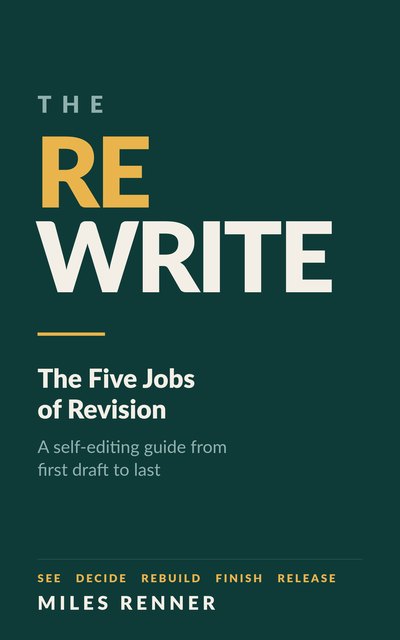 The RewriteThe Five Jobs of Revision: A Self-Editing Guide from First Draft to Last