Home › About
About
Miles Renner
Miles Renner is a novelist. He writes romance and thrillers — and books about the work of producing them: You Are Not Lazy, The Four-Day Novel, Thirty Days of Writing, Page One and The Rewrite, alongside a series of short genre guides.
He started using AI drafting tools the year they got good, made most of the mistakes in Chapter 2 of The Four-Day Novel personally, and kept notes. The method in that book is the one he uses. He writes about craft, tools and the business of publishing — including the parts that don't work.
The books came out of a simple frustration: almost everything written about writing is a prescription issued without a diagnosis. Sit down every day. Kill your darlings. Just keep going. Advice like that works beautifully for the people who give it, and for everyone else it functions as a verdict — you were told the answer, it didn't work, so the fault must be you.
One method, several arenas
Each book does the same thing to a different word.
Authorship. It was never located in the typing. It sits in vision, architecture, voice and judgment — which is why an arrangement publishing has accepted for two centuries, from Dumas to Patterson, is not the scandal it gets treated as, and why the interesting questions about AI and fiction are different from the ones usually asked.
Lazy. The reasons people stop writing fall into three families — permission, structure and craft — which fail in a predictable order and disguise themselves as one another with real skill. They need opposite treatments. Applying the wrong one doesn't just fail; it adds another item to a case the writer has been building against themselves for years.
Revision. One word covering five unrelated jobs, which is why it feels bottomless. Split it into seeing, deciding, rebuilding, finishing and releasing, put them in the only order that works, and each becomes a task with a finish line.
The hook. Readers who abandon an opening are usually not bored but lost — and being lost inside a book does not feel like boredom, it feels like your own tiredness. Four questions have to be answered before anyone will turn the page, and only one of them is the one writers work on.
The genre labels. Upmarket. Literary. Speculative. Agents ask for these by name and then define them as moods. The short guides replace each mood with a mechanism you can revise towards, one category at a time.
How the books are built
They are research books more than opinion books. Each one is assembled from a large body of primary material — working writers describing, at length and in public, what actually happens to them — then organized around whatever structure the evidence turns out to support. Where a claim comes from a named writer, it is attributed. Where it comes from a pattern across many, it is described as one.
The house rule is that a chapter has to end with something you can do, on a specific morning, that has a finish line you can reach. Encouragement is not a deliverable.
Contact
Questions, corrections, review copies, or a note about something one of the books got wrong: hello@milesrenner.com. Corrections are genuinely welcome and get made in the next revision.
The books
 You Are Not LazyThe Real Reasons You Stopped Writing, and How to Start Again
 The Four-Day NovelThe Honest Method for Writing Fiction with AI
 Thirty Days of WritingA Day-by-Day Companion for the Novel-in-a-Month Challenge
 Page OneHow to Open a Novel: The Four Questions Every Opening Has to Answer
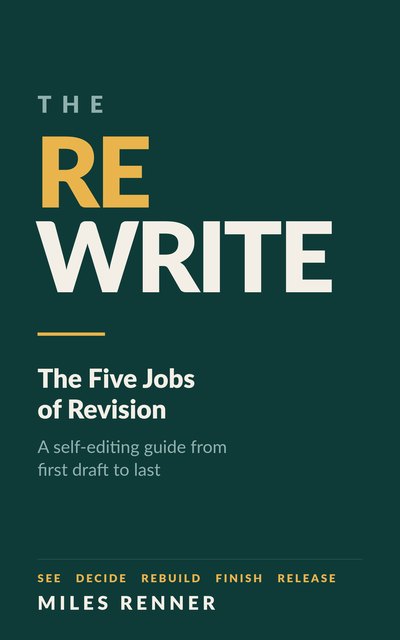 The RewriteThe Five Jobs of Revision: A Self-Editing Guide from First Draft to Last