If you have stopped
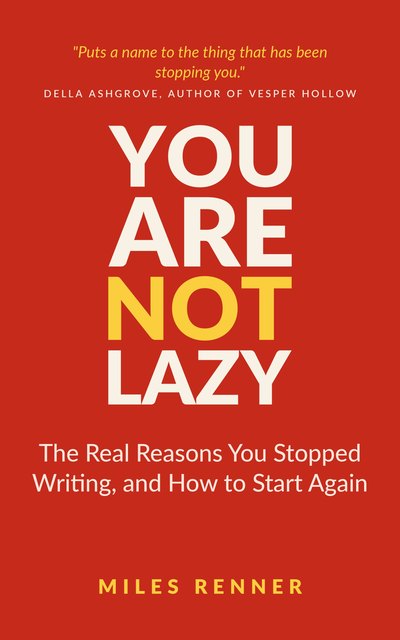
You Are Not Lazy
The Real Reasons You Stopped Writing, and How to Start Again
For fifty years the advice has been the same four words. Butt in chair. It works — for the people who say it.
Kindle · Paperback · included in Kindle Unlimited
For everyone else, “butt in chair” operates as a verdict with exactly one available explanation: that you didn't try hard enough.
Ten years of that and you are not a person with a writing problem any more. You are a person with a case built against yourself, and every unwritten morning files another exhibit.
This book replaces the instruction with a question: what is actually stopping me?
Three layers, and they impersonate each other
There are three families of answer — permission, structure and craft. They fail in a predictable order. They disguise themselves as one another with real skill. And they need completely different treatments, some of them opposite.
Apply the wrong one and you don't merely fail; you add another item to the case. The writer who can't start because chapter eleven has a structural fault does not need discipline, and is actively harmed by being told they lack it. The writer who has never been given permission to write badly does not need a better outline.
About half of this book is craft rather than psychology — because a surprising amount of what feels like a failure of will turns out, on inspection, to be an actual structural fault in an actual manuscript, with a name, a fix, and an afternoon's work attached.
The two chapters people go back to
- Chapter 2 is an assessment that sorts your problem into one of the three layers and tells you which hundred pages to read and which to skip.
- Chapter 7 maps the six places writers actually stop — and there are only six — with a named fix for each.
The afterword is written specifically for the reader it didn't work for, which is not a chapter most books of this kind are willing to include.
“You were never lazy. You were working from a bad map.”
Contents
- •Foreword
PART I — The Wrong Diagnosis
- 1Butt in Chair
- 2Three Kinds of Permission
PART II — The Permission You Weren't Given
- 3There Is No Board of Writers
- 4The Guilt Engine
- 5You Cannot See Your Own Work
- 6The Cost of Not Being Read
PART III — Stuck Is Not Blocked
- 7The Six Places Writers Stop
- 8Why the Middle Rots
- 9You Don't Know What Your Book Is About
- 10Permission to Write It Badly
- 11Fixing It Is a Different Job
PART IV — A Life That Can Hold a Book
- 12Your Process Is Not Their Process
- 13Time Is Not the Problem (Except When It Is)
- 14Burnout Is Not a Bad Week
- 15Finishing, and What Comes After
- •Afterword
Who it's for
- You have stopped writing, and the only explanation anyone has offered you is a character flaw.
- You start things and they die around the middle, repeatedly, and you have decided that means something about you.
- You want the diagnosis before the discipline.
Who it isn't for
- You want a thirty-day challenge and a habit tracker. This book is trying to find out what is wrong first.
- You are already writing happily and consistently. Read The Rewrite instead.
Questions
Is this a motivation book?
No. Roughly half of it is craft — structure, middles, knowing what your book is about — because a large share of what presents as low motivation is a real fault in a real manuscript. Motivational advice applied to a structural problem makes the problem worse, and the book is blunt about that.
Why can't I make myself write?
That is the question the book is built around, and its answer is that “can't make myself” is a symptom with three quite different causes: a permission you were never given, a life with no room in it, or an actual fault in the manuscript. They look identical from the inside and need opposite treatments. Chapter 2 sorts yours.
What is the assessment in Chapter 2?
A short diagnostic that places what is stopping you into one of the three layers, then tells you which chapters to read and which to skip. Guessing wrong is common and costly, which is why it comes second.
I'm stuck in the middle of a specific book. Does this help with that?
That is Part III. Chapter 7 lists the six places writers actually stop, Chapter 8 is specifically about why middles rot, and Chapter 9 is about the failure underneath most of them — not being able to say what the book is about.
Is it only for novelists?
The examples lean fiction, but the permission and structure chapters apply to any long project — memoir, nonfiction, a thesis. The craft chapters are most useful if you're writing a book-length narrative.
You Are Not Lazy
Replaces “butt in chair” with a better question: what is actually stopping me?
Kindle · Paperback · included in Kindle Unlimited
Also by Miles Renner
 The Four-Day NovelThe Honest Method for Writing Fiction with AI
 Thirty Days of WritingA Day-by-Day Companion for the Novel-in-a-Month Challenge
 Page OneHow to Open a Novel: The Four Questions Every Opening Has to Answer
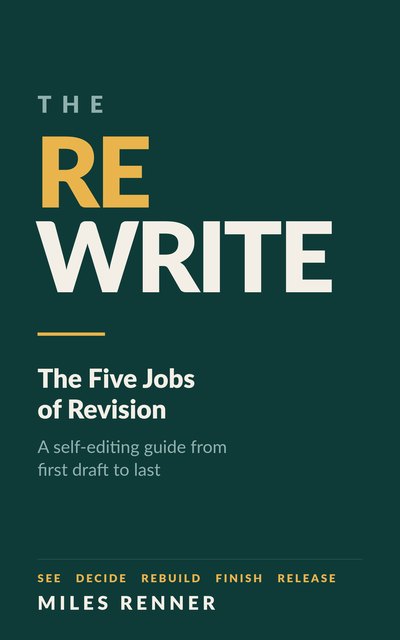 The RewriteThe Five Jobs of Revision: A Self-Editing Guide from First Draft to Last