If agents keep asking for it by name
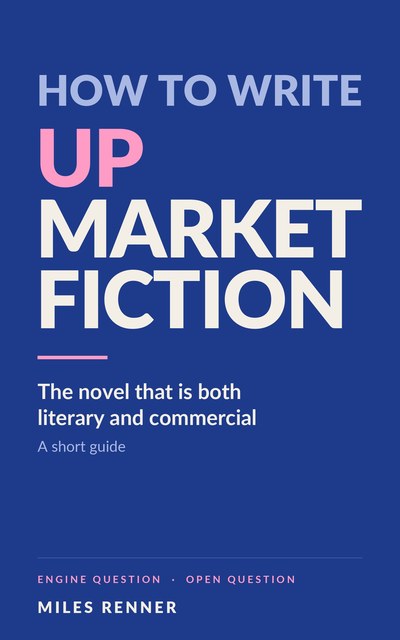
How to Write Upmarket Fiction
The Novel That Is Both Literary and Commercial
“Literary quality, commercial appeal.” Now go and write that.
Kindle
Agents ask for it by name. Upmarket women’s fiction. Upmarket suspense. Upmarket historical. You looked the word up, nodded at the definition, and still could not tell whether your book was one.
That is not a failure of attention. It is a failure of the definition, which describes a vibe instead of a mechanism — and you cannot revise towards a vibe.
The mechanism
An upmarket novel makes two promises at once. It answers a plot question that keeps the pages turning, and it leaves a human question open that readers will argue about for years.
People finish upmarket books because one question closes. They talk about them because another one doesn’t. The recommendations, the book clubs, the long tail — all of it comes from the question you refused to settle.
Which is why the two ways a manuscript lands almost upmarket are opposite problems, and their repairs point in opposite directions. Close both questions and you have written something competent and forgettable. Close neither and you have written something admired and unfinished. Knowing which one you have is the whole difference between a productive month and a wasted one.
Why the usual advice sends you to the wrong drawer
Told that upmarket means literary quality, most writers go and work on their sentences. The prose gets better. The manuscript does not get closer — because the problem was structural, and a beautiful paragraph in the wrong place is a stall rather than a strength. There is a lyricism budget, and spending it is a structural decision, not a matter of taste.
Also in here
- How to build a plot engine that genuinely pulls, without sliding into formula.
- The tidy ending — how a satisfying final twist can quietly kill the question your whole book was about.
- How upmarket behaves inside suspense, historical, women’s fiction, speculative and love stories — and why romance is a special case.
- Querying, comps and word count, plus what changes if you publish the book yourself.
Built to be run
Every chapter ends with a test you run on your own manuscript. A test, not a rewrite — because you are the one reader who cannot come to your book cold. All eight collect into The Upmarket Audit at the back: one page, run against any draft, any time.
Short on purpose. Seventy-three pages, eight chapters, and nothing in it that isn’t a decision you actually have to make.
“People finish upmarket books because one question closes, and they talk about them because another one doesn’t.”
What’s inside
- Why “literary + commercial” sends writers to polish sentences when the real problem is structural.
- The two ways “almost upmarket” manuscripts fail — and why their fixes are opposites.
- How to build a plot engine without sliding into formula.
- The tidy ending: how a satisfying final twist can quietly kill the question your book was about.
- The lyricism budget: where beautiful prose helps, and where it stalls the story.
- How upmarket works in suspense, historical, women’s fiction, speculative and love stories — and why romance is a special case.
- Querying, comps and word count — and what changes if you publish it yourself.
- The Upmarket Audit — all eight chapter tests collected on a single page.
Who it's for
- An agent, an editor or a contest category asked for upmarket, and you cannot tell whether your book qualifies.
- Your manuscript gets called beautiful and slow, or gripping and slight, and you don’t know which repair applies.
- You are choosing comps and shelving for a book that sits between two shelves.
Who it isn't for
- You want a definition to quote in a query letter. That already exists, and it is the problem.
- You are after line-level prose coaching. The lyricism chapter is about budget, not technique.
- You have no draft and no outline yet — there is nothing to run the tests on. Start with You Are Not Lazy or The Four Day Novel.
Questions
What is upmarket fiction?
A novel that makes two promises at once: it answers a plot question that keeps the pages turning, and it leaves a human question open that readers argue about afterwards. The usual definition — “literary quality, commercial appeal” — describes how the finished book feels rather than how it is built, which is exactly why it is impossible to revise towards.
What is the difference between upmarket and literary fiction?
Literary fiction is under no obligation to close its plot question, and a great deal of it deliberately doesn’t. Upmarket fiction has to. The open human question is the half the two categories share; the closed plot question is the half that gets an upmarket novel read to the last page by someone who bought it in an airport.
Is upmarket fiction the same as women’s fiction?
No. Upmarket describes how a book is built; women’s fiction is a category about what a book is about. A novel can be upmarket suspense, upmarket historical or upmarket speculative. The genre chapter works through each of those in turn.
Which genres does the guide cover?
Suspense, historical, women’s fiction, speculative and love stories — with romance treated separately, because its promise to the reader interacts with an open question differently from the rest.
Is it useful if I’m self-publishing?
Yes. The last chapter covers querying, comps and word count for writers going to agents, and then what changes when you publish the book yourself — where the category signals live when there is no agent and no imprint to send them.
Do I need to read the other books first?
No, it stands alone. Readers of The Rewrite and Page One will recognise the format — a test at the end of every chapter, all of them collected into an audit at the back.
How to Write Upmarket Fiction
Every definition of upmarket fiction says the same thing — literary quality, commercial appeal. None of them tells you what to do. This one gives you the mechanism instead of the vibe.
Kindle