If the premise is brilliant and the book isn’t
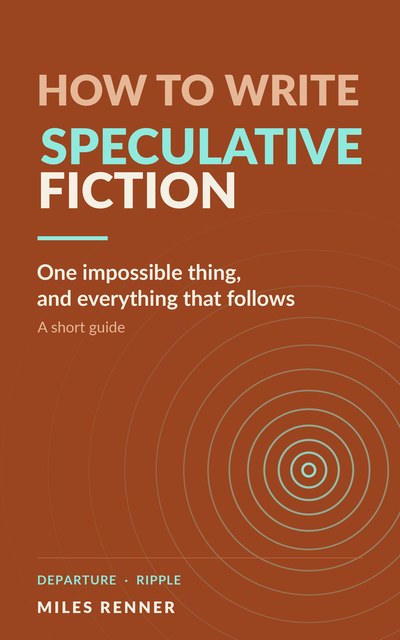
How to Write Speculative Fiction
One Impossible Thing, and Everything That Follows
Your premise is brilliant. So why does the book feel unfinished?
Kindle
Agents ask for speculative fiction all the time, and almost nobody explains what they mean. The standard definition — anything that isn’t realism — is accurate and useless at the desk. It tells you what your book isn’t. It never tells you what to do.
A definition you can work with
Speculative fiction changes one thing about the world, then tells the truth about what happens next.
Your reader will grant you the one impossible thing almost for free. Everything after that has to be earned — and that aftermath is where most speculative manuscripts quietly fail. Not in the idea, which is usually good, but in the refusal to follow it anywhere uncomfortable.
Press the one thing harder
The instinct when a world feels thin is to add: a second magic system, another faction, more history. The book argues the opposite. Choose the one departure your story cannot exist without and press it until it yields — outward into a family, a job, a law, and the lies people would tell to live beside it.
Also in here
- How to aim the premise at your protagonist’s deepest wound, so the world and the character become one story rather than two.
- Explaining a world without info-dumps — and never letting the magic solve what your character should.
- Build much, show little: detail that implies a world instead of describing one.
- Finding the label that tells the truth about your book, and pitching it with the premise and the stakes in the same breath.
Built to be run
Every chapter ends with the Ripple, a short test you run on your own manuscript. Across the book one novel-in-progress, What the River Keeps, is diagnosed and repaired step by step, so you watch each fix work rather than take it on trust.
For writers of speculative fiction, literary speculative, magical realism, near-future and grounded fantasy — and for anyone who has been told their premise is lovely but the book “didn’t feel fully realized.”
“Your reader will grant you one impossible thing almost for free. Everything after that has to be earned.”
What’s inside
- Choose the one departure your story can’t exist without, and press it harder instead of adding more.
- Follow its ripples outward — into a family, a job, a law, and the lies people would tell.
- Aim your premise at your protagonist’s deepest wound, so the world and the character become one story.
- Explain your world without info-dumps, and never let the magic solve what your character should.
- Build much and show little, with detail that implies a world instead of describing one.
- Find the label that tells the truth about your book, and pitch it with the premise and the stakes in the same breath.
- The Ripple — the test at the end of every chapter, run on your own draft.
- What the River Keeps — one novel-in-progress diagnosed and repaired across the whole book.
Who it's for
- Your premise gets a strong reaction and the manuscript doesn’t.
- You have been told the book “didn’t feel fully realized” and can’t find what’s missing.
- You write magical realism, near-future or grounded fantasy and keep being asked what shelf it’s on.
Who it isn't for
- You want a worldbuilding bible template. This is about which parts of a world earn their place on the page.
- You are writing epic secondary-world fantasy with several magic systems. The one-departure rule will fight you.
- You have no draft yet — the Ripple needs pages to run on.
Questions
What is speculative fiction?
Fiction that changes one thing about the world and then tells the truth about what happens next. The usual definition — anything that isn’t realism — is accurate and useless at the desk, because it describes a boundary rather than a method. It covers science fiction, fantasy, magical realism, near-future and alternate history, but the working part is the aftermath, not the label.
What is the difference between speculative fiction and science fiction or fantasy?
Science fiction and fantasy are genres with their own shelves, readerships and conventions. Speculative is the wider term agents use when a book borrows one impossible element but reads like literary or contemporary fiction otherwise — and it is often the honest label for a manuscript that keeps getting called unclassifiable.
How much worldbuilding does a novel actually need?
Build much, show little. The chapter on this argues for deep private worldbuilding and very selective detail on the page — a single consequence implied in passing will do more than a paragraph of explanation, because the reader builds the rest.
How do I avoid info-dumps?
By asking what the scene needs the reader to understand right now rather than what you know. There is a chapter on it, and a related rule that catches more manuscripts: never let the magic solve what your character should.
How do I pitch a speculative novel?
Premise and stakes in the same breath, under a label that tells the truth about the book. The last chapter is about finding that label — which is usually the step writers skip, and the reason a good manuscript gets queried to the wrong agents.
Do I need to read the other guides first?
No, each stands alone. If your book is also aiming at literary quality and commercial pull, the upmarket guide covers that pairing directly.
How to Write Speculative Fiction
Speculative fiction changes one thing about the world, then tells the truth about what happens next. Your reader grants you the one impossible thing almost for free. Everything after that has to be earned.
Kindle